
Imagination Wasn't Allowed... But it Saved Me Anyway

The holidays just ended, and my husband and I found ourselves talking about Santa. Or, more specifically, about our seven-year-old niece, who just figured out that he isn’t real. She’s furious with her mom for “lying” to her, but she fortunately also promised not to spoil the magic for her little brother. At the same time, she marched up to me during gifts and said, very knowingly, “Aunt Janae… that gift from Santa? That was from you.”
I laughed and said, “Yup. That one was me.”
The whole conversation stirred something old and tender in me.
You see, I never had the experience she’s grieving - not the shock of learning Santa isn’t real, not the betrayal, not the bittersweet nostalgia of discovering that magic had an expiration date. In my house growing up, imaginary things weren’t encouraged to begin with. They weren’t whimsical or playful or sweet.
They were… suspicious.
And that’s really where this story begins.
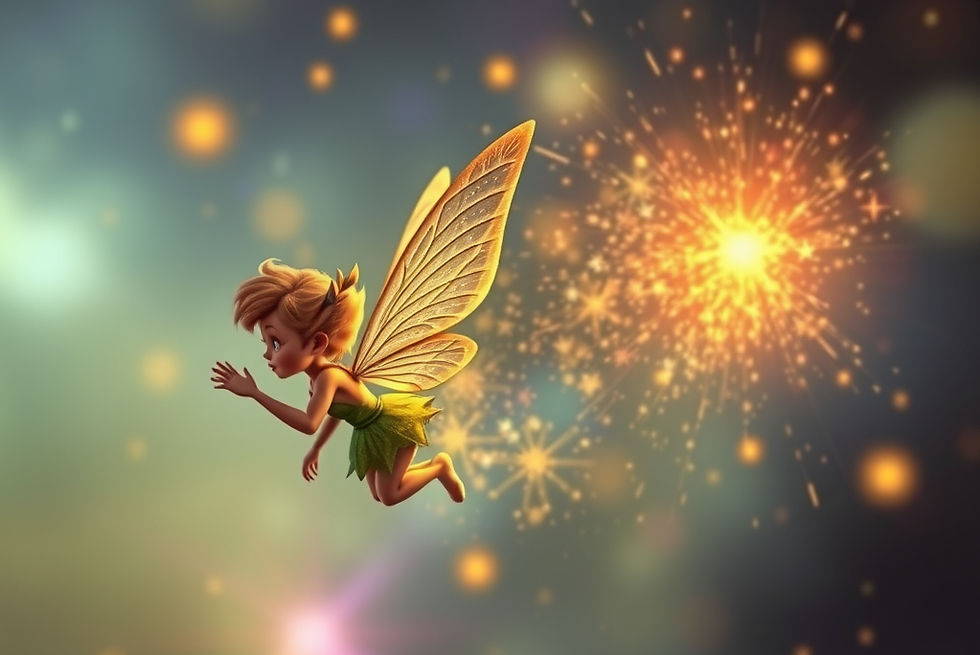
The Day I Learned Imagination Wasn’t Welcome
When I was about four or five, I had an imaginary friend – an elephant who lived in my closet. To me, he was comforting and gentle and completely harmless. Just part of the little world that kids build inside their minds.
But my mother didn’t see it that way.
She asked questions instead of smiling along. A LOT of questions.
Did I really see him?Did I really believe he existed?Was he real?
My mother never really understood imagination. My father, who would later be diagnosed with bipolar disorder – and potentially schizophrenia – had already been struggling for years – though no one called it that yet. It wasn’t until I was ten that a diagnosis arrived and some of the chaos began to make sense.
Looking back now, I think it’s possible my mother was afraid that imagination might be a sign of something dangerous. That fantasy meant instability. That pretending meant risk. Maybe my little elephant in the closet felt, to her, like a doorway to something she didn’t know how to handle.
But to four-year-old me, all I knew was that I’d said the wrong thing.
I remember sitting there, confused and overwhelmed, until finally I said the words she needed to hear:
“He’s not real. I made him up.”
And that was the moment I learned the rule, even if no one ever said it out loud:
In our house, imagination wasn’t play.It was a threat.And it was safer to keep it hidden.
Closing the Windows of Magic
Later, when my sisters were little, I used to tell them stories about my grand nighttime adventures. I told stories about Peter Pan visiting me at night and whisking me away to Neverland to play with the pixies and the mermaids. They loved it – the sparkle, the magic, the freedom of it.
Until one day my mother overheard, interrupted the story, and said, in front of them:
“You know that’s not real, right?”
And just like that, another window closed.
We didn’t believe in Santa or the Easter Bunny either. My father used to say, “I’m not letting some imaginary Santa take credit for the money I spent on your presents,” and he meant it.
So, I learned something quietly, very early:
My imagination wasn’t gone.I just had to hide it.
I still went on adventures with Peter Pan… I just never left my bedroom. At night, when things felt tense or unpredictable, I told myself stories in my head so I could fall asleep. Neverland became the one world nobody else could interfere with. He and the lost boys and the mermaids were just one of my many companions that became my escape when the world was too sad or stressful to think about it.
My imagination became my safe place.
The Shape It Took in Adulthood
That didn’t stop when I grew up.
During my first marriage — when things were painful, lonely, and emotionally unsafe — I created another “imaginary friend.” Not in a childlike sense… but as a compassionate inner voice I could talk to when no one around me could be kind.
Some people journal.Some people pray.I talked to the voice inside me that knew how to understand.
And honestly… it helped me survive.
Imagination followed me into other parts of my adult life, too. It shows up in the way I solve problems, the way I dream of what could exist instead of only what does. It shows up in creative thinking at work, in decorating and remodeling my home, in storytelling, in how I approach uncertainty.
I’ll never forget my realtor looking at the house I fell in love with and saying — with no small amount of disbelief — “It’s a mess.” And I replied, “Yes… but can’t you see it? I can make it exactly how I want it.” He rolled his eyes and insisted on every inspection imaginable — but he eventually conceded that there was opportunity inside that broken-down building I now call home.
Even when I was forced to hide it as a child, imagination found places to breathe. I poured it into music, theater, and performance arts — the outlets my parents did approve of. I am grateful for those outlets now. They gave my creativity a narrow but necessary avenue to grow.
But reclaiming my imagination as an adult?That has been one of the most meaningful forms of self-returning I’ve ever experienced.
Today, I don’t hide it anymore.
I write. I create. I tell stories. I imagine gentler worlds – both inside myself and around me. And in this season of my life, I finally have the space to let that creative self-exist out loud, without apology.
Imagination Wasn’t Escapism — It Was Hope
Imagination has carried me through every dark tunnel of my life.
It helped me cope when I felt small and powerless.It helped me see possibility when the present felt unbearable.
Imagination wasn’t something fragile or childish.It was resilience.
It was the whisper that said:
“This chapter isn’t forever. Something better is ahead.”
And I still believe that.
We may begin by imagining a better story inside our minds… but eventually courage shows up. Healing shows up. Choices stack up. And slowly, the imagined life becomes a real one.
I love my imagination. It is one of the best things about me. I’ve walked through trauma, illness, abuse, divorce, and heartbreak — and still, my mind could envision something better ahead. It has helped me not just survive, but THRIVE.
That is a blessing.
What I Want for My Future Children
Sometimes I wonder about Santa — not whether he’s “real,” but whether the magic matters more than the technical truth. Whether imagination, play, and wonder are worth protecting, even if they exist inside a story we know is made-up.
I think they are.
I don’t want my future children to learn that imagination is dangerous or embarrassing or something to shut down. I want them to have closet elephants and nighttime adventures and stories that sparkle. I want them to feel wonder, not fear, when their minds begin to create worlds of their own.
Because imagination didn’t break me.
It saved me.
And if you are like me and imagination ever helped you through something hard — you’re not strange, or childish, or broken.
You are resilient.


Comments